MIO Kids Seepferdchen (Ages 5+)

Building Confidence: A Gentle Path to Swimming

After their first experiences in the water, children begin learning to swim in the MIO Kids Seepferdchen beginner’s course. They are now in the water without their parents, and we gently support them as they develop greater confidence, safety, and independence.

A Holistic Approach to Becoming Comfortable in the Water: For us, learning to swim means developing a playful and well-rounded relationship with the water. This includes feeling safe both above and below the surface, finding one’s way around the pool, developing body awareness, coordination, and breathing skills — and, above all, building courage and self-confidence.

What We Learn Together (Skills & Learning Areas): Children learn to orient themselves in the water, maintain a stable body position on their front and back, glide, jump, and practise simple diving exercises. Step by step, basic swimming movements and exhaling into the water are introduced.

Guided with Care: The children set the pace of their learning. We guide them, structure the lessons, and provide a safe environment through playful exercises, a clear and caring framework, and plenty of encouragement.

The course specifically prepares children for the Seepferdchen swimming badge.

Most importantly, children gain confidence, develop trust, and enjoy coming back to the water while continuing to make steady progress.
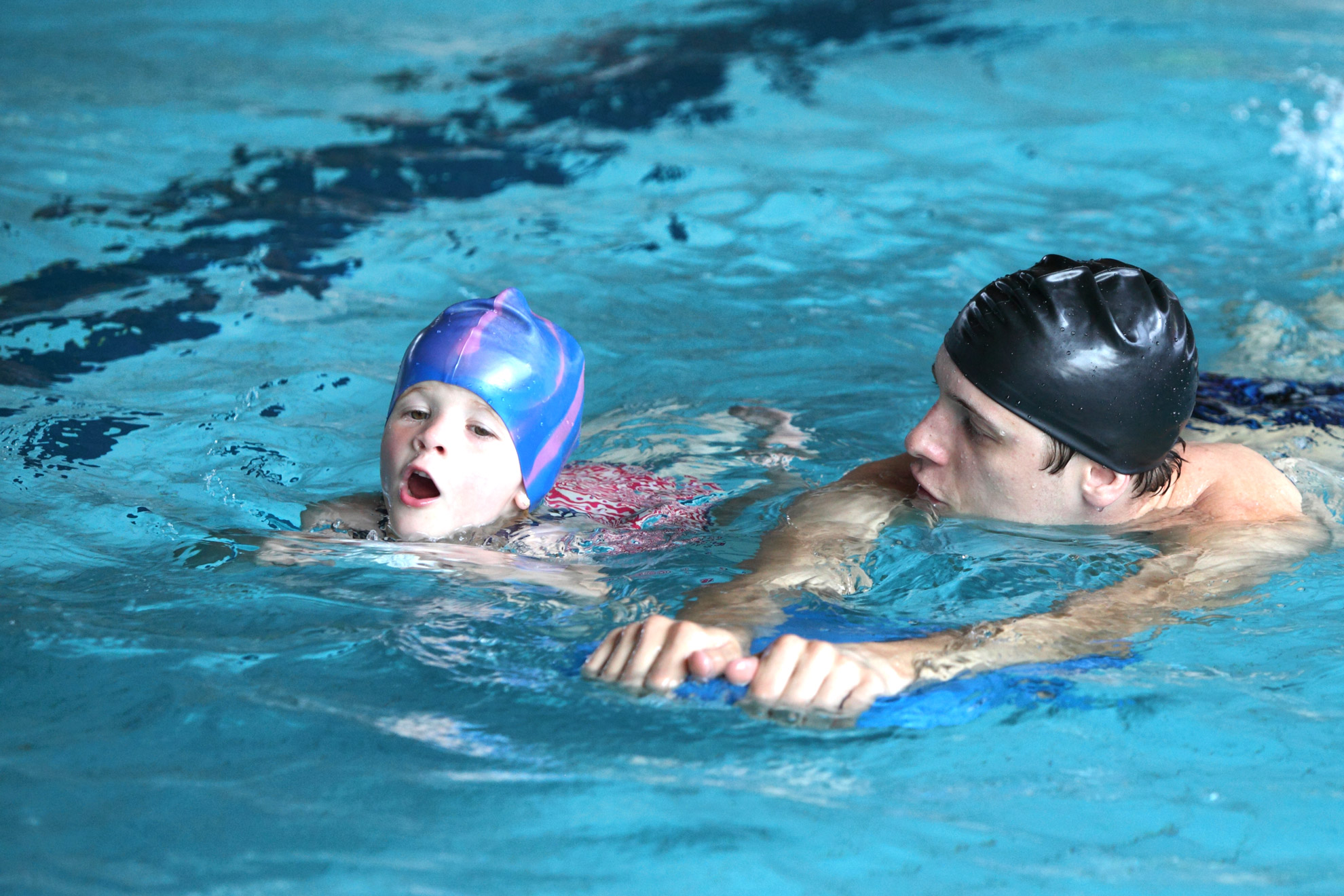
Building confidence and trust in their own abilities. We teach the fundamentals in an approachable way, until the children proudly hold their first swimming badge in their hands.

Price: €249 (10 sessions × 30 minutes)

Maximum of 6 children per group
Individual support in the water

30 minutes of focused learning time
Attention and time for every child
Fun and effective learning

Ideal for reinforcing what has been learned after completing a course block or taking the time to prepare for the next goal at your own pace.

A little note for children who are anxious

Especially for children who are anxious, it is wonderful when their first experience with water is associated not with fear, but with curiosity, excitement, and anticipation. You can gently support your child at home and help create a positive attitude towards learning to swim.

Please avoid well-intentioned but negatively phrased sentences such as: “You don’t need to be afraid,” “You won’t sink,” or “It’s not that bad.” Children often mainly hear the words “afraid,” “sink,” or “bad.” The subconscious mind often filters out words such as “not” and “don’t.”

More helpful are simple, reassuring phrases such as:
“I’m here with you. We’ll do this together.”
“You can take your time and look around.”
“Today, we’ll only try as much as feels comfortable for you.”

If a swimming course feels like too much at the moment, there is no need to force anything – sometimes a child simply needs a little more time. By arrangement, you are also very welcome to come and watch a lesson first, so that we can get to know each other calmly and without pressure.

To ensure that no one feels overwhelmed, we deliberately teach in very small groups, in a calm atmosphere, and with plenty of patience. This allows even anxious children to gradually build confidence and feel safe in the water, step by step.

I often find that simply watching a lesson gives me the opportunity to gently encourage children, while allowing you and your child to gradually build trust in me and in the process.